SeasonNovember–March
BaseGran Canaria or Lanzarote
WindNE trades, 15–25 kts typical


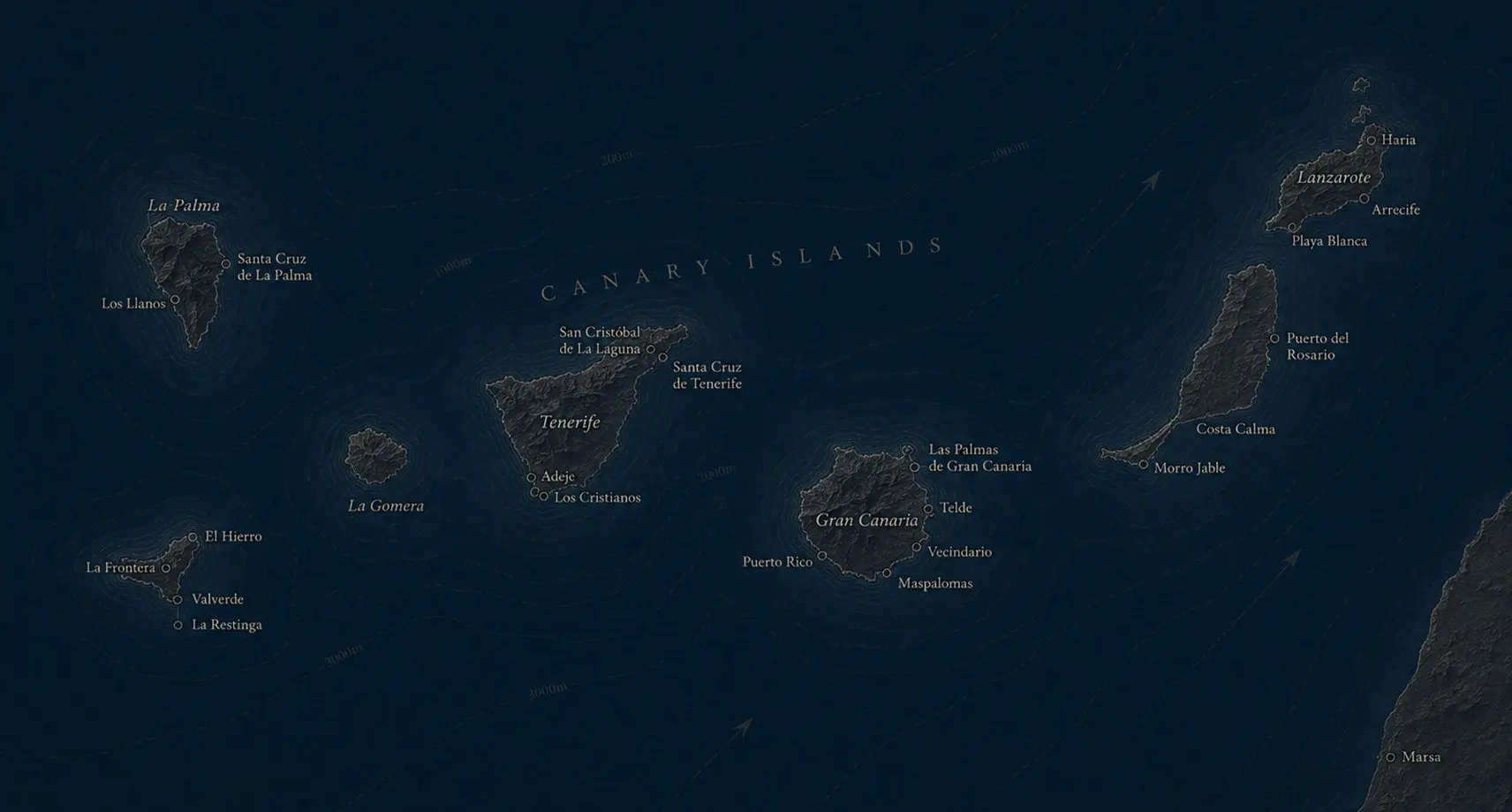
The Canary Islands sit in the north-east trade wind belt. From November to March, those winds are consistent — typically north-east, 15–25 knots, with a swell pattern that varies by island and aspect. It is not always flat, and it is not always predictable. But it is rarely nothing.
For coached sailing, that consistency matters. You can plan passages between islands with reasonable confidence in what the wind will do. The distances between islands range from short day sails to proper overnight legs. And because the season is winter, the anchorages that are overrun in summer are quieter — anchoring practice in real conditions without fighting for space.
The trade-off: Atlantic swell can make some anchorages uncomfortable. Conditions on the exposed northern and western coasts of the islands are different from the sheltered eastern sides. Understanding how to read that and plan accordingly is part of what a Canaries sailing programme develops.
What you will sail
Day sails and overnight legs between the eastern islands — Gran Canaria, Lanzarote, Fuerteventura. Distances of 50–120 nm depending on the route. Enough to build passage-planning habits without being offshore for more than a night.
The Canaries have a range of anchorage types: sheltered bays on eastern coasts, exposed roadsteads that require good holding technique, and some marinas where arrival and departure work is genuinely demanding.
Reaching and running in consistent north-easterly trades is the primary sailing diet. It rewards sail trim discipline and gives you experience with a steady wind angle over longer distances — different from the variable thermal conditions of the Mediterranean summer.
Is this destination for you?
The Canary Islands are the arrival point for the autumn transit from the Mediterranean and the departure point for the spring transit north. If you are considering combining a Cruising programme in the Canaries with a transit leg, that is worth discussing during enquiry.
Tell us your timing and what you want to work on. We will confirm what is available and whether a Cruising or Custom programme fits best.