SeasonNovember–March
BasePuerto Calero
ConditionsStrong NE trades, exposed east, sheltered west


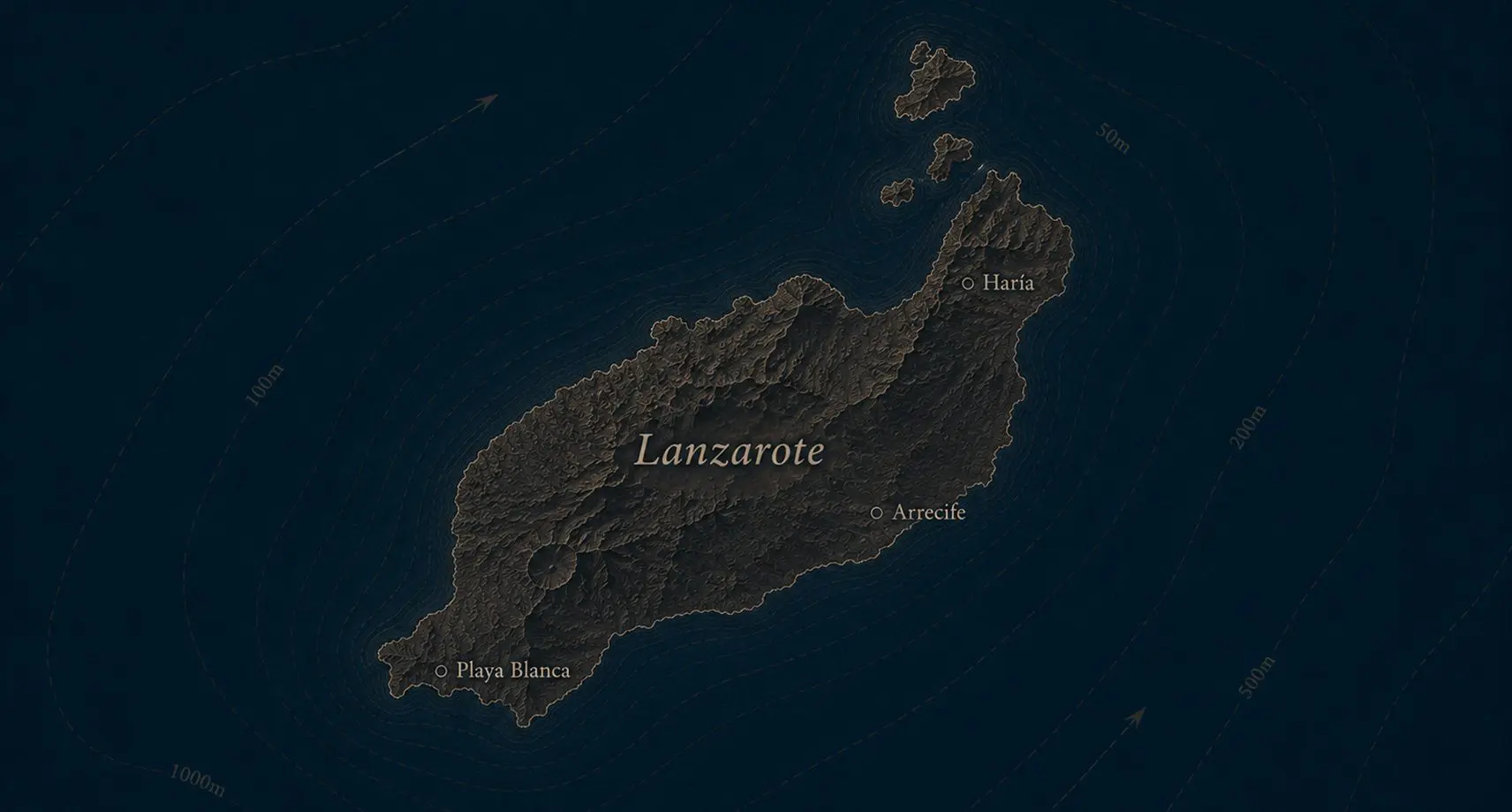
Lanzarote is not the easiest Canary Island to sail. The trade winds hit the north and east coasts directly — stronger and more consistent than on Gran Canaria’s sheltered south. The anchorages on the exposed coasts are open roadsteads that require good holding technique and an eye on the wind. The calmer anchorages on the western coast are fewer and require longer passages to reach.
That is exactly what makes Lanzarote valuable for coached sailing. The conditions are demanding enough to develop real skills — anchoring in swell, managing the boat in strong winds, understanding how to read exposure and holding from a chart before you commit to an anchorage.
Puerto Calero and Puerto del Carmen on the east coast are the main marina bases — both functional and well-connected.
What you will sail
Sailing north along the east coast of Lanzarote in 20–30 knots of north-easterly is substantive sailing. Reefing decisions, watchkeeping discipline, and managing a performance catamaran in consistent strong wind.
The small island of La Graciosa sits off the northern tip of Lanzarote, separated by a narrow channel with strong tidal streams. Reaching the anchorages on La Graciosa is a navigation and timing exercise — understanding the channel, planning the approach, and anchoring in a genuinely exposed bay.
The passage south from Lanzarote to Fuerteventura covers 20–30 nm through the Bocaina Strait — strong acceleration effect, confused sea state when wind and tide oppose. Short but demanding.
Lanzarote suits sailors who want more demanding conditions. Tell us your experience level and timing — we will give you an honest assessment.