
Performance Cruising
A week of sailing. Not a week on a boat.
Coastal passages, real conditions, and coaching integrated into every watch.
Mediterranean & Canary Islands · 5–8 days
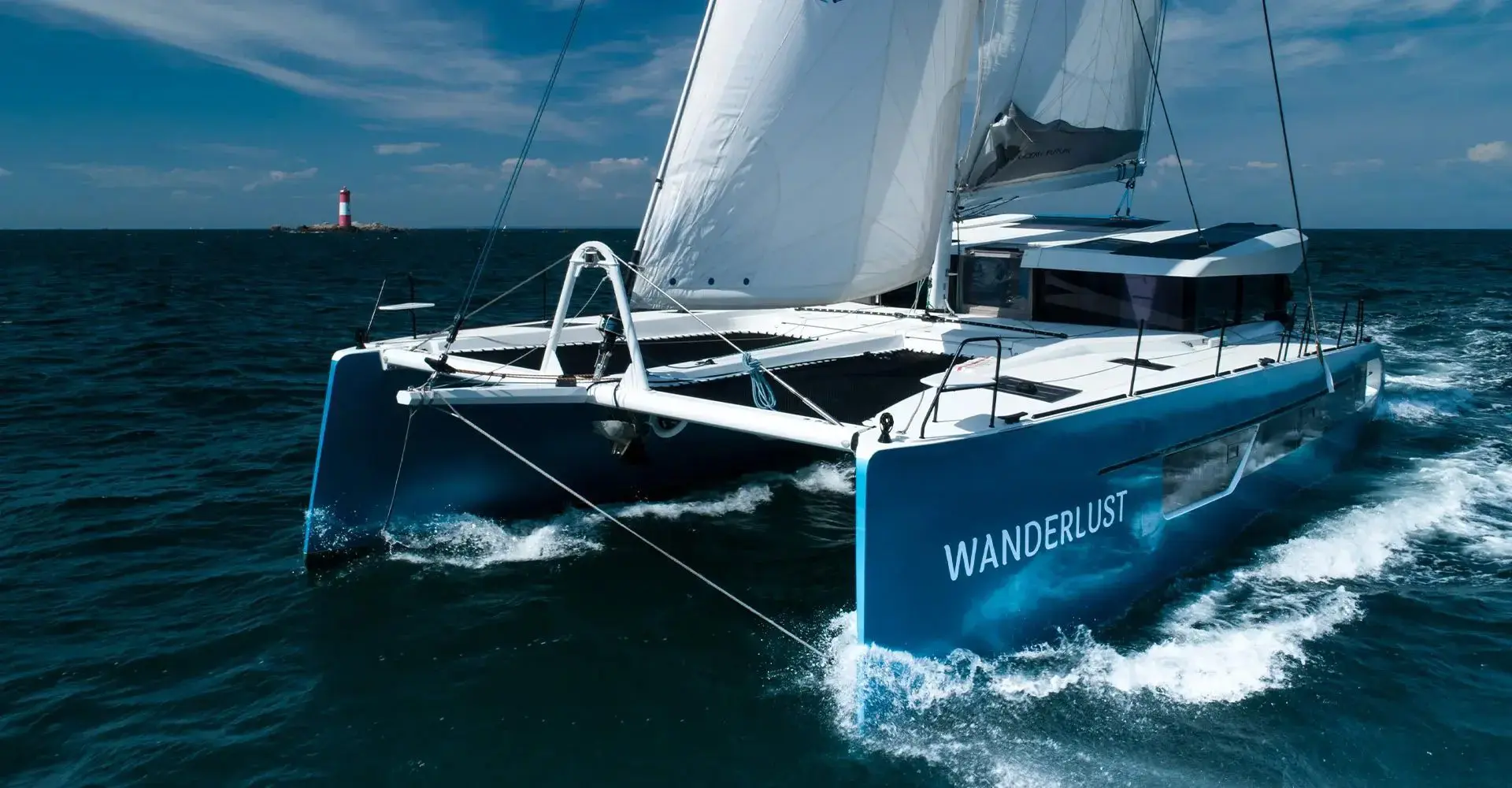
Sailing coaching in
real conditions.
A Cruising week is a structured sailing programme, not a charter holiday. You sail the boat, take watches, make passages, and work on specific skills with Joop available throughout. The route follows the season and the conditions — the coaching follows you.
You leave harbour on day one. From that point, the boat is crewed by the group — helming, sail handling, watches, navigation, and passage planning — with coaching integrated into each. There is no classroom element. The coaching happens while the sailing is happening.
By the end of the week you will have logged real sea miles, managed the energy system on an electric catamaran, stood offshore watches, and handled a 50-foot boat through whatever the Mediterranean or Canaries chose to provide. How much of that you absorb depends on what you put in.
Flexible routingThe itinerary is shaped by the wind and the collective spirit of the group. We don’t follow a rigid schedule; we follow the elements to ensure the best possible sailing every single day.
Real anchoragesFrom technical approaches to peaceful nights in secluded bays, we embrace the full experience. We don’t just talk about anchoring; we make it an integral part of our daily rhythm.
Same base, different daysBy returning to the same base, we eliminate the clutter of logistics. Everything between your arrival and departure is dedicated to the water, the wind, and the performance of the boat.
How a week unfolds
No two weeks are the same.
The structure is.
The exact route depends on conditions, season, and the group’s developing skill level. The shape of the week is consistent.
Day 1 — Arrival and departure
Boat briefing, safety handover, system orientation. You leave harbour the same day. First night at anchor or in a small port.
Days 2–3 — First coastal passages
Daylight and overnight sailing. Focus on points of sail, basic trim, and boat handling at sea. First watch system introduced. Coaching covers what you are actually doing, not a syllabus.
Days 4–5 — Offshore or island passage
Longer passage, more variable conditions. Navigation responsibilities shared with the group. Energy management, watchkeeping discipline, and manoeuvring in new harbours become the focus.
Days 6–7 — Return and debrief
Final passage back to base. Individual and group debrief. What developed, what needs more time, what to prioritise next. Departure day 8.
What the coaching covers
Sail trim and boat setup
Upwind, reaching, and downwind trim on a performance catamaran. How the daggerboards work, what the traveller does, why speed and angle trade off the way they do. Practical — always in context of what the boat is doing.
Passage planning and navigation
Reading a weather window, planning a leg, understanding tidal gates and departure timing. Navigation by chart and instrument. The decision-making process that sits behind a passage — not just the route-plotting.
Watchkeeping and sea routine
Watch systems, handover discipline, what the helm needs to track, how to stay alert through a night watch. The habits that keep a boat safe offshore, built during real passages rather than explained at a desk.
Manoeuvring under sail and power
Coming alongside, anchoring, sail entry to harbour. The twin electric drives make manoeuvring precise and quiet — and provide a useful contrast to conventional engine handling. Every marina stop is a coaching opportunity.
Weather interpretation
Reading synoptic charts, understanding the local effects in the Med and Canaries, making go/no-go decisions. You learn to build a picture of the coming 24–48 hours, not to rely on a single forecast.
Energy management
Solar input, state of charge, hotel load, and regeneration. Managing an electric boat’s energy budget is part of sailing it properly. By the end of the week it becomes routine — not a technical exercise.
What to know
before you join the crew.
Duration5–10 days
Guests1–6
RegionsMed or Canaries
ExperienceAny level welcome
Experience & participation
Our journeys are designed for a wide spectrum of sailors—from those stepping onto a performance boat for the first time to experienced coastal navigators looking to refine their mastery. Our guidance is tailored to the group’s collective background. If you are a complete beginner, let’s discuss it during your initial booking call; we’ll ensure this format is the right starting point for your journey.
Group & solo bookings
Volt Sail trips are available as private charters for groups of two to six, offering a completely bespoke experience. We also offer individual berths on selected dates for solo sailors looking to join a like-minded crew.
Pricing
Cruising trip pricing depends on duration, season, and whether you are booking a whole boat or individual berths. See our Pricing page for the framework, or contact us for current availability and rates.
Routing is always subject to conditions. While we follow the best possible conditions, we do not guarantee specific anchorages or daily distances. What we do guarantee is an authentic sailing experience and expert guidance throughout—working with whatever the elements provide.
What’s included.
What’s not.
Included
- Berth on Nyota for the full programme
- All meals aboard
- Coaching throughout
- Safety equipment and life jackets
- Fuel (electric — charged by solar)
- Navigation and chart tools
- Harbour fees for planned stops
Not included
- Flights and travel to the base port
- Travel insurance (required)
- Personal expenses ashore
- Alcoholic drinks
- Wet weather gear (can be hired locally)
Common questions
Do I need offshore sailing experience?
No. Cruising weeks are designed to work across all experience levels — from first-time offshore sailors to those returning to sailing after a gap. The coaching adapts to the group’s starting point. What matters is that you are engaged and willing to take the helm.
How many people are on the boat?
Up to four guests plus Joop. The Windelo 50 is a 50-foot catamaran with four private cabins, so the space works well at this number. Smaller groups are possible — enquire about joining as a solo or pair.
Where does the programme start and finish?
Start and finish port depends on season and the specific programme. In the Med, typical bases are Valencia and Mallorca. In the Canaries, Gran Canaria or Lanzarote. The exact base is confirmed at booking.
Can I join as a solo guest?
Yes. If there are other guests already booked on the same programme, you would be sharing the boat with them. If you want the boat exclusively, that is possible at full group pricing. Mention in your enquiry that you are joining solo and we will let you know what is available.
What if the weather changes the route?
It often does. That is partly the point. Route decisions are made as the week unfolds based on conditions and what the group is ready for. There is no fixed itinerary to stick to — the programme follows the sailing, not the other way around.
Ready to book a week?
Tell us when you want to sail and what you are working towards. We will confirm availability and the current base port.