
Extended Sea Trial
Test it properly. Then decide.
A few hours at a boat show cannot tell you what three days at sea will.
Mediterranean & Canary Islands — Conditions permitting
For people who take
a purchase seriously.
You are considering a performance electric catamaran like a Windelo 50 or similar. You have read the specs, watched the videos, and perhaps stood on one at a boat show.
But you have not lived on one. You have not managed energy budgets across a three-day passage. You have not anchored in silence and woken up to a fully charged system. You have not manoeuvred in a tight marina with twin electric drives and no engine note to guide you.
That gap between reading and knowing is what this programme closes.
Prospective buyersYou are in the research or shortlist phase and want real-world validation — not a sales experience.
Future liveaboardsYou plan to spend extended time aboard and need to test whether the lifestyle actually fits.
Upgrading sailorsYou are stepping up from a monohull or a conventional diesel cat and want to understand what changes — and what does not.
What you will leave knowing
We design each sea trial around a set of scenario days. The exact mix depends on your goals, conditions, and duration — but these are the areas we cover.
Energy day
Solar yield, battery management, consumption patterns under sail and at anchor. You will understand your energy budget — not as a spec sheet, but as a lived routine.
Light-air performance
How the boat moves below 8 knots. Code Zero deployment, sail trim discipline, and what “fast for a cruising cat” actually feels like in practice.
Harbour and marina handling
Twin-drive manoeuvring in tight spaces. Coming alongside without an engine note. Bow and stern control. The skills that matter most in everyday use.
Anchoring and silence
No generator vibration through the hull. No diesel smell at 06:00. Sleep quality at anchor is a serious purchase consideration — you will test it for real.
Night routine and watchkeeping
Watch system basics, navigation lighting, offshore rhythm. If passage-making is part of your plan, this is where you start to understand what that actually requires of you.
Passage readiness
Routing decisions, weather windows, provisioning weight, and the systems discipline that separates a capable offshore boat from an expensive coastal toy.
The process
Intake
Tell us what you want to validate, your sailing background, and your likely timeline. We ask practical questions — no pitch, no pressure.
Plan
We design a programme around your goals: which scenario days, in what order, over how many days. Three days is the minimum. Seven gives you conditions, rhythm, and depth.
Sail
Aboard Nyota in the Mediterranean or Canary Islands. Hands on the helm from day one. Your coach adapts pace and focus to what you need — not a fixed curriculum.
Debrief
An honest, structured debrief. What worked. What surprised you. What you still want to test. And a clear next-step plan — whether that is buying, waiting, or looking at a different class of boat.
Three days minimum.
Seven days for certainty.
A three-day sea trial gives you a solid foundation: energy management, harbour work, light-air sailing, and one night offshore if conditions allow. Most buyers find that five to seven days is where real confidence develops — you start to build routines rather than just observations.
Minimum3 days
Recommended5–7 days
LocationMed or Canary Islands
AvailabilityOn request
All sea trials are subject to weather windows and sea conditions. We will not sail a programme that does not serve your goals. That is the point.
This is not a charter.
It is not a course either.
A charter gives you a boat and a skipper. A course gives you a syllabus and a certificate. This is neither.
It is an independent evaluation programme. The coach’s job is to help you understand whether this type of boat, in this kind of use, is right for you — and to make sure you leave with the sailing competence to make that call honestly.
If the answer is no, that is a useful result. We would rather you leave with clarity than with a booking you regret.
“You are not buying a trip. You are buying a decision.”
No dealer relationshipWe have no commercial interest in which boat you buy or whether you buy at all. Our only interest is that the programme is worth your time.
Coached, not skipperedYou are at the helm. The coach guides, corrects, and explains — but the boat is under your hands throughout.
Your goals, not our curriculumThe programme is built around what you actually want to test. If energy management matters most to you, that is where we spend the time.
The platform
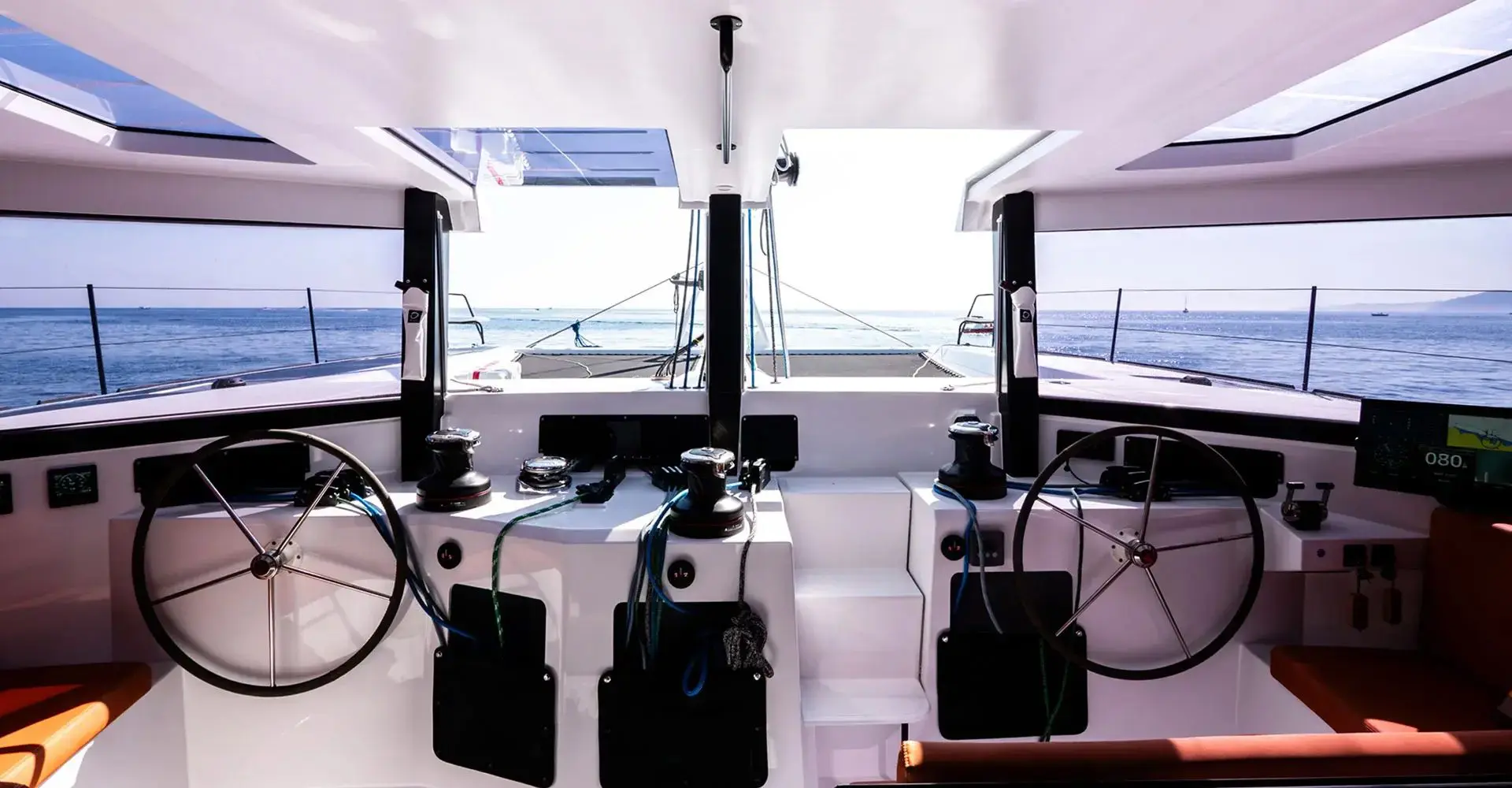
Nyota is a Windelo 50 — a French-built performance electric catamaran designed around solar propulsion, high-performance sailing, and off-grid living. If you are researching this class of boat, this sea trial gives you direct, extended time aboard one under real conditions.
What we offer is honest sailing time on a real boat, with someone whose job is to help you evaluate clearly — not sell you anything.
Common questions
What sailing experience do I need?
There is no minimum certification requirement, but this programme works best if you have some sailing background — coastal cruising experience, a basic licence, or equivalent time on the water. If you are entirely new to sailing, one of our Cruising trips is a better starting point.
How many people join a sea trial?
Sea trials are typically one to two people. Occasionally three, if the group is sailing together and have shared goals. We do not mix strangers into the same sea trial programme — this is your evaluation, not a shared trip.
Can I bring my partner or crew?
Yes. If you are buying as a couple or planning to sail with a regular crew member, having them aboard for the sea trial is valuable. They will be part of the programme, not passengers.
Do I get a formal report or certificate?
The debrief is structured and honest, and we can provide written notes if that is useful. This is not a formal certification programme — it is a practical evaluation. If you want sea time logged for licensing purposes, mention this during intake and we will factor it in.
What if conditions are not good during my programme?
We plan around weather windows. If conditions change significantly during a programme, we adapt the scenario days accordingly — prioritising what you came to learn. We do not cancel lightly, but we also do not sail programmes that do not serve your goals.
What is the cost?
Sea trial pricing is on request, as it depends on duration, dates, and what the programme includes. Contact us with your goals and we will send a clear breakdown. See also our Pricing page for general context on how we structure costs.
How far in advance do I need to book?
We recommend at least six to eight weeks for planning and logistics. For specific weather windows (particularly autumn transits), lead time of three to four months is advisable.
Ready to plan your sea trial?
Tell us what you are considering, where you are in your research, and what you most want to test. We will reply with practical options and a clear sense of whether this programme fits your situation.