
Mediterranean to Canary Islands.

The passage south.
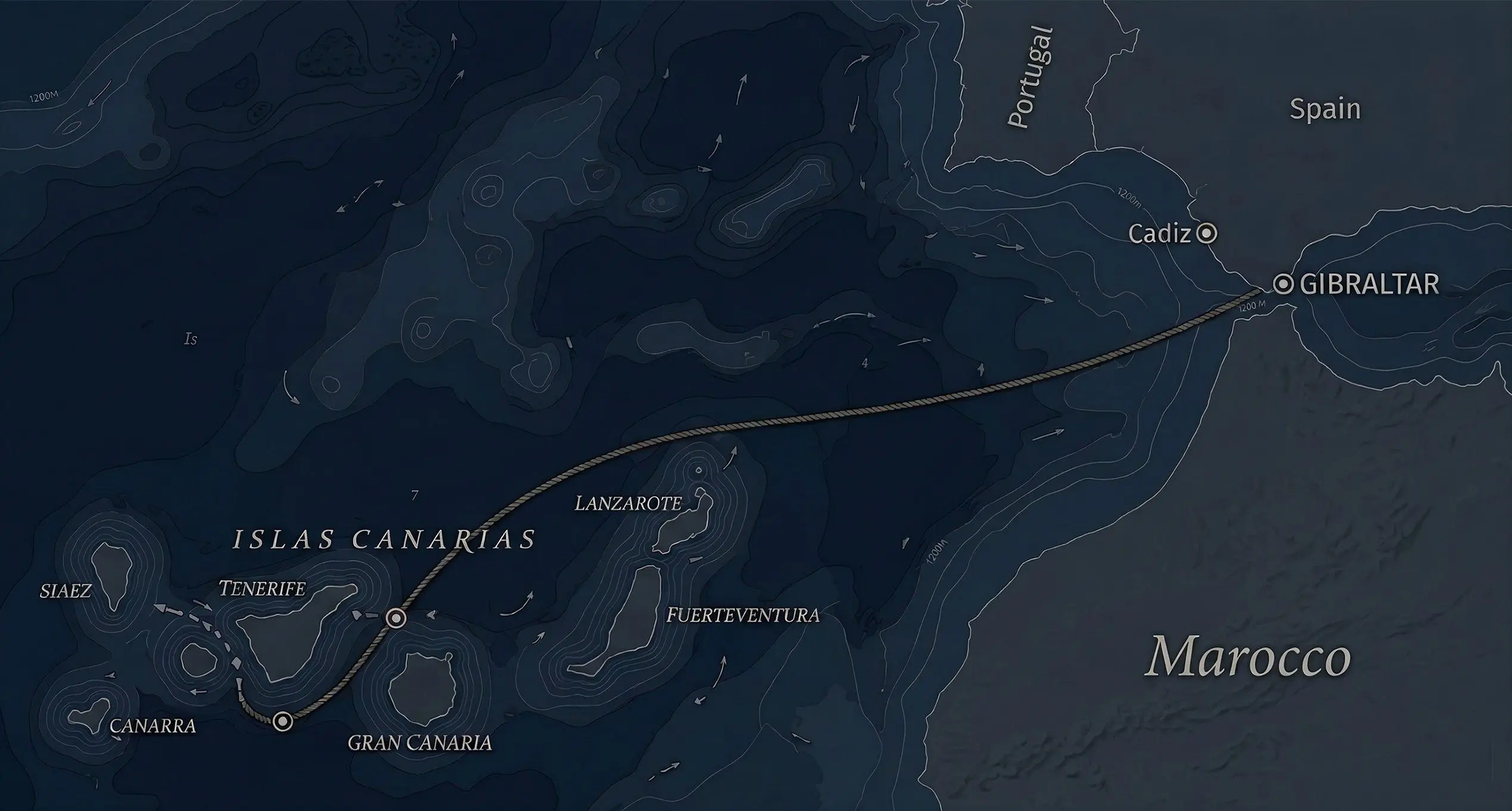
This is the classic autumn run: south-west from the Spanish Mediterranean coast, out through the Strait of Gibraltar or around Cape St. Vincent, then south and south-west across open Atlantic to the Canary Islands.
The prevailing wind in autumn sets up well for this direction — typically northerlies and north-easterlies once you are clear of the Portuguese coast. For a performance catamaran, that means reaching and running conditions for much of the passage: good boat speed, manageable swell, and the kind of sailing that makes offshore miles feel earned rather than endured.
Departure is typically from Valencia, Alicante, or the Balearic Islands, depending on where Nyota is based at the start of the season. Arrival is Las Palmas de Gran Canaria — the standard waypoint for Atlantic-bound sailors.
Passage duration depends on conditions. Eight days is achievable in good winds. Twelve or more is possible if the wind is light or the routing requires a detour. We do not rush — we sail.
Life on passage
We leave with a weather window. The first day out of the Med — through Gibraltar or rounding the Portuguese corner — is typically the most complex: shipping traffic, wind shifts, and the transition from coastal to offshore mode. You will be part of managing that transition.
Once offshore and south-bound, the passage settles into its rhythm. Watches rotate, the boat finds her groove, and the days start to feel different from anything coastal. This is where most sailors discover what they are actually capable of.
Each morning we review weather, boat speed, and the route ahead. What to carry, when to gybe, whether to push for speed or conserve energy. Real decisions, at sea.
Entering Las Palmas after a week-plus offshore is a particular feeling. The debrief covers what the passage revealed — about your sailing, your watch habits, and what you would tackle differently next time.
What the coach focuses on
Downwind sail handling
The Med-to-Canaries run is predominantly a downwind passage. Code Zero and gennaker work, gybing in swell, managing a catamaran at speed in following seas — these are the sail-handling skills this route develops.
Watch discipline
Your first offshore watches. What to monitor, how to log, when to call. The habits that make a reliable offshore crew member — built through practice, not briefing.
Routing under real conditions
The forecast and the reality rarely match perfectly. You will make routing decisions when they diverge — understanding the reasoning, not just following the call.
Night sailing
Navigation lights, AIS targets, shipping lanes off Cape Finisterre and the Canary approach. Night watches offshore are different from night sailing in coastal waters — this passage gives you several of them.
Energy management on passage
Solar generation drops offshore when cloud cover increases. You will manage energy consumption under sail and understand what the boat's systems require over a multi-day passage.
Arrival routines
Entry procedures, marina handling after days at sea, post-passage systems checks. The routines that close out a passage properly — and set you up for the next one.
What’s included.
What’s not.
Included
- All meals and provisions aboard
- Coaching throughout the passage
- Fuel and marina fees en route
- Safety equipment and offshore kit (boat-side)
- Las Palmas arrival logistics brief
Not included
- Flights to departure port and from Las Palmas
- Personal foul weather gear and harness
- Crew visa requirements (non-EU sailors: check in advance)
- Travel insurance (required)
- Drinks beyond what is provisioned
Common questions
Interested in this passage?
Tell us your sailing background and your timing. We will confirm current availability and let you know whether this route fits where you are as a sailor.